Video Analytics for Anomaly Detection
Project Overview
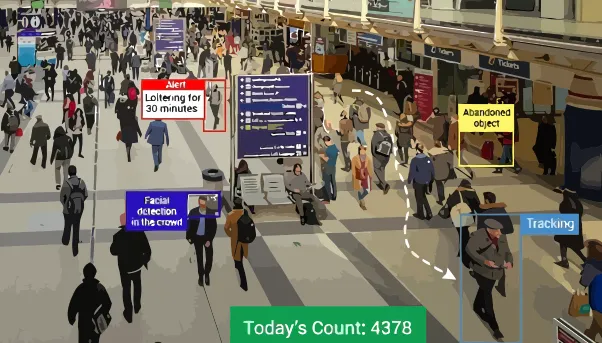
Most commercial camera systems can only detect a limited set of predefined objects, and streaming video to the cloud requires substantial bandwidth. This project addresses these limitations by combining pre-trained vision models to identify complex anomalies through edge processing rather than full real-time video analysis. The system performs lightweight edge analysis to catch the first signs of anomalies, such as unusual animal movement, after-hours vehicle entry, or risky behaviour, before running more advanced inference. The approach reduces bandwidth costs and increases responsiveness for both rural and urban deployments. The research explores four real-world smart city applications across Wales: farm security in Monmouthshire, vandalism detection at Raglan Castle, usage monitoring in Blaenau Gwent car parks, and detection of anti-social behaviour at bus stops.
Each deployment site presents distinct challenges for edge-based anomaly detection. Farm security targets theft prevention and worker safety, Raglan Castle focuses on vandalism detection and child safety, Blaenau Gwent car parks address usage monitoring and public transport incentivisation, and bus stops require detection of anti-social behaviour in public spaces.
Key objectives span the full pipeline from literature review to practical deployment. These include reviewing anomaly detection literature from camera feeds, measuring processing trade-offs between edge and cloud architectures, exploring environmental factors affecting detection performance under low-light conditions, developing adaptive systems for anomaly selection based on deployment context, and creating techniques that leverage existing deep learning approaches with standard cameras. The project is conducted in partnership with Cisco, BT, and UtterBerry.
Team



Partners