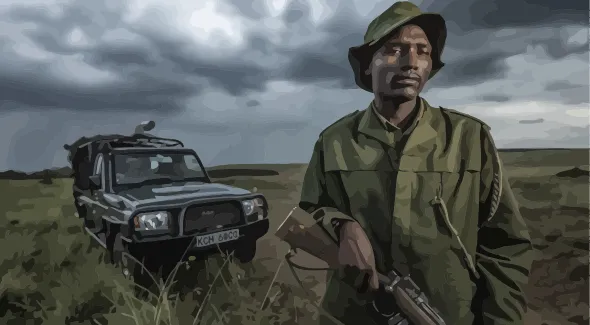
Tracking Poachers using BLE Beacons
Project Overview
Tracking poacher vehicles in remote jungle environments presents significant challenges due to the lack of satellite or cellular coverage. This project explores whether Bluetooth Low Energy beacons can provide an effective low-cost tracking solution in such harsh terrain. The approach deploys BLE beacons along rural roadways with concealed receivers hidden inside target vehicles. When a vehicle passes each beacon, the receiver captures the unique beacon identifier. Upon reaching areas with GSM signal, the collected data is transmitted via SMS for analysis. Field testing was conducted at the Danau Girang Field Centre in Sabah, Malaysia, where poaching threatens endangered wildlife. Controlled experiments and real-world trials evaluated detection effectiveness under heavy jungle foliage, assessing signal obstruction and optimal beacon placement. The results demonstrate that BLE-based tracking offers a viable and affordable alternative for monitoring vehicle movements in areas lacking conventional network infrastructure.
The findings inform practical deployment guidelines for conservation teams in connectivity-poor environments. In locations where conventional tracking technologies such as GPS or cellular-based systems are impractical, the BLE beacon approach provides a workable alternative that can be set up with minimal technical expertise.
The low-cost and concealable nature of the system makes it particularly suited to anti-poaching operations. Conservation teams operating in connectivity-poor environments can deploy the beacons with minimal technical expertise, and the use of 3D-printed enclosures allows receivers to be hidden discreetly within vehicles.
Team




Funding