
Smart Home Lab
Project Overview
The Smart Home Lab is a dedicated research infrastructure featuring over 170 smart home devices spanning lighting, heating ventilation and air conditioning, robotics, multimedia, and household appliances, all connected and orchestrated through the openHAB home automation platform. The lab provides an isolated and controllable environment in which researchers can capture realistic datasets, prototype home automation scenarios, and study security and privacy controls for Internet of Things deployments. The facility supports a wide range of experimental work, from cyber-physical anomaly detection to energy management and occupant behaviour analysis. By hosting diverse device types from multiple manufacturers and communication protocols, the lab reflects the heterogeneity of real-world smart home ecosystems. The lab also serves as a testbed for developing and validating datasets used in machine learning research, including datasets for anomaly detection.
Researchers use the lab to investigate how different devices interact and how automation rules can be designed and tested. The environment also enables studies of how data collected from smart homes can be used for analytics while preserving occupant privacy, providing insights that would be difficult to obtain in occupied residential settings.
The infrastructure is available to support collaborative research projects across the smart home domain. It provides a foundation for reproducible experimentation, enabling researchers from different institutions to run consistent experiments against the same device configurations and data collection pipelines.
Smart Home Lab Photos
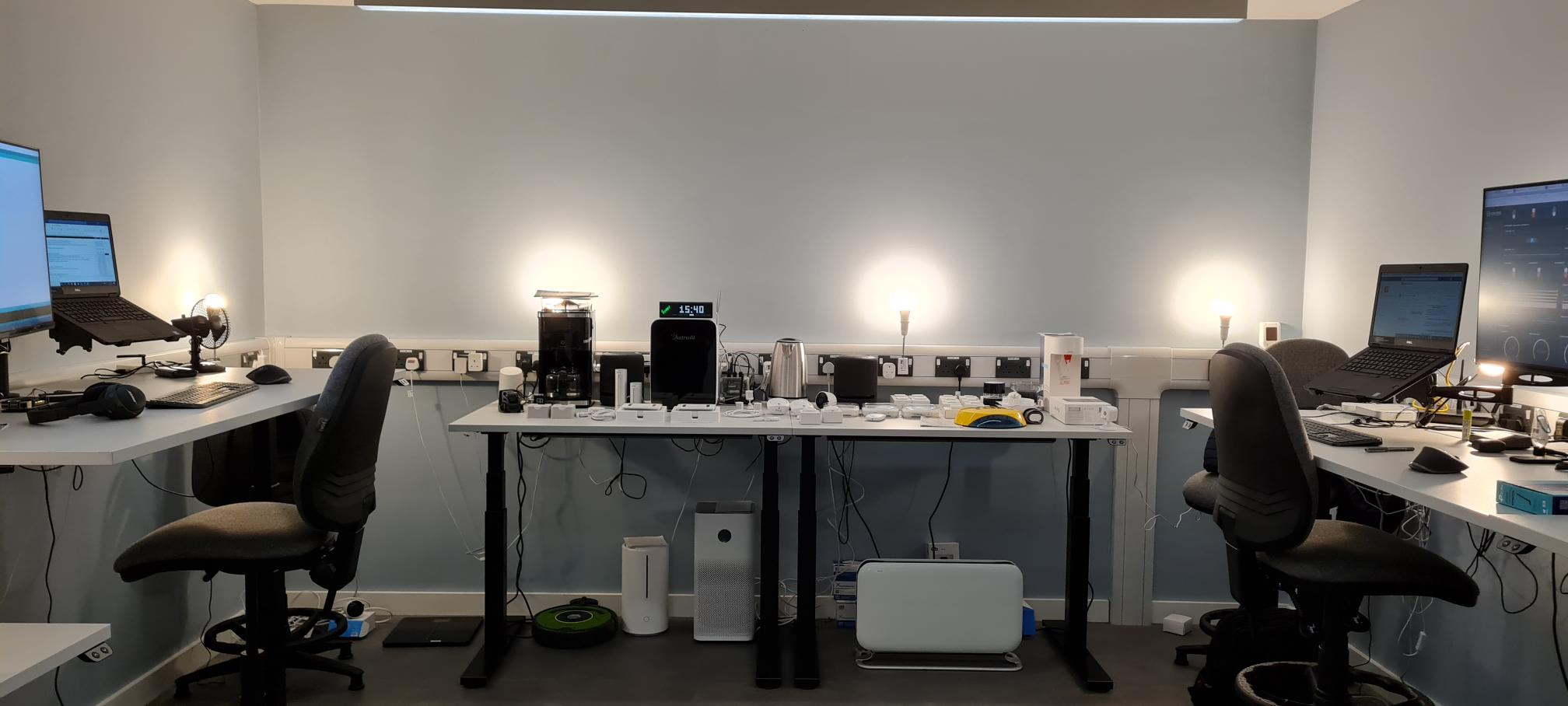
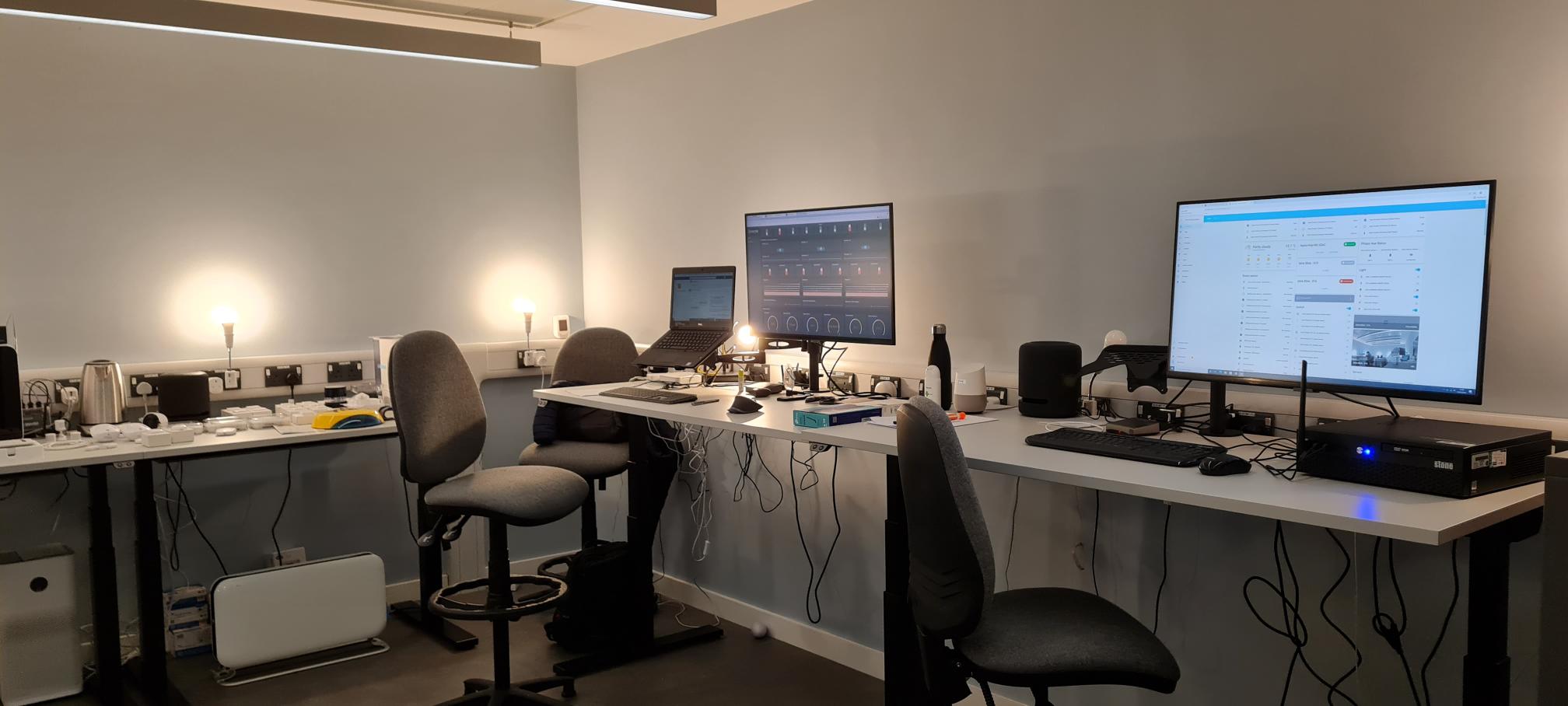
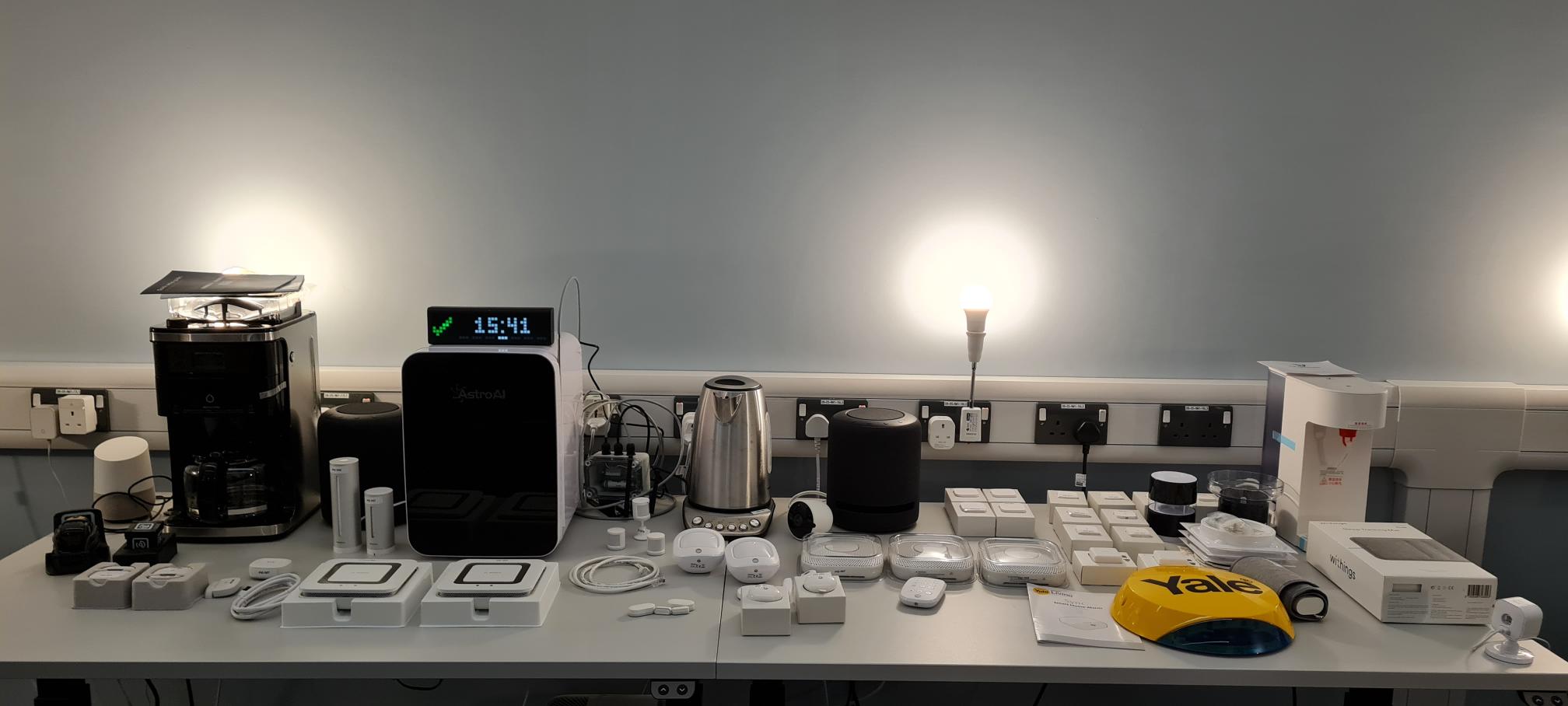
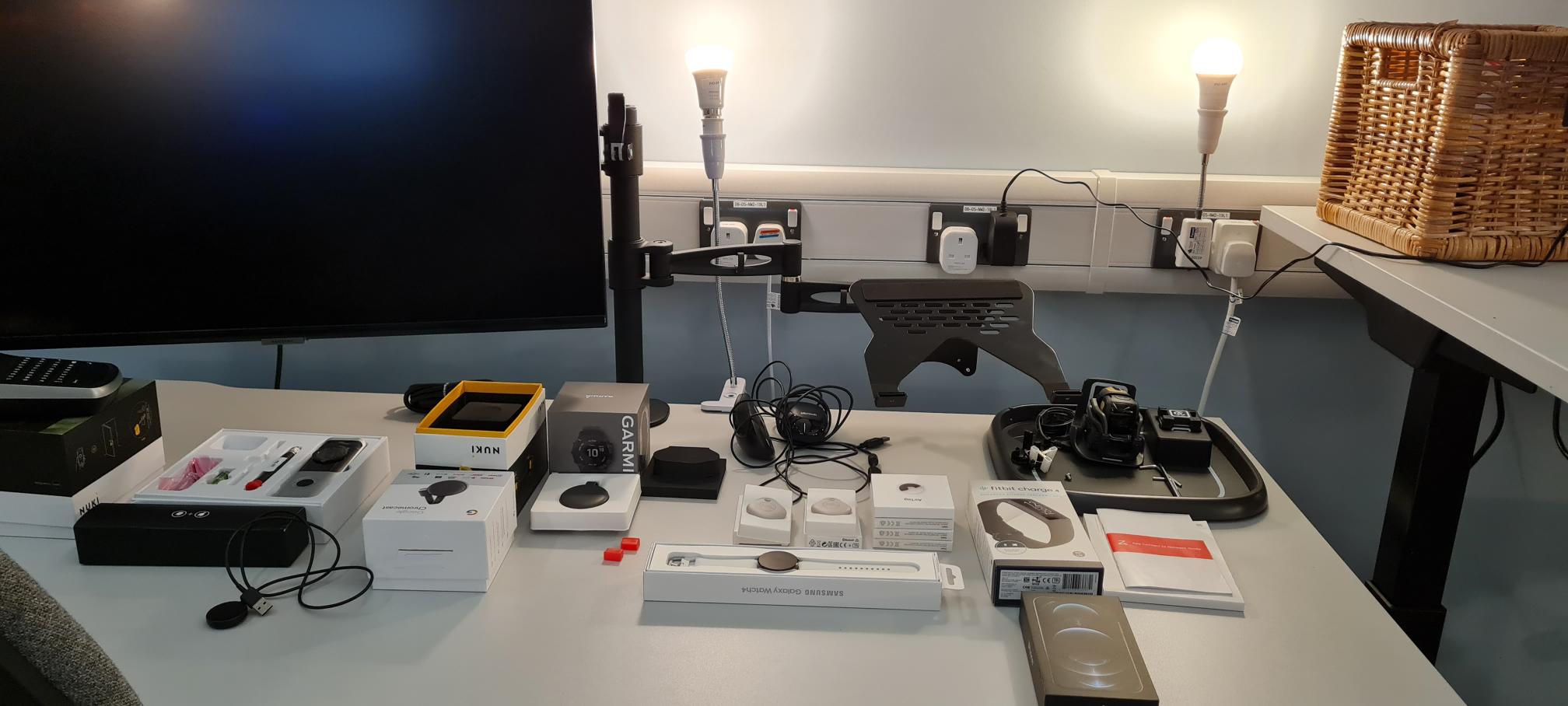
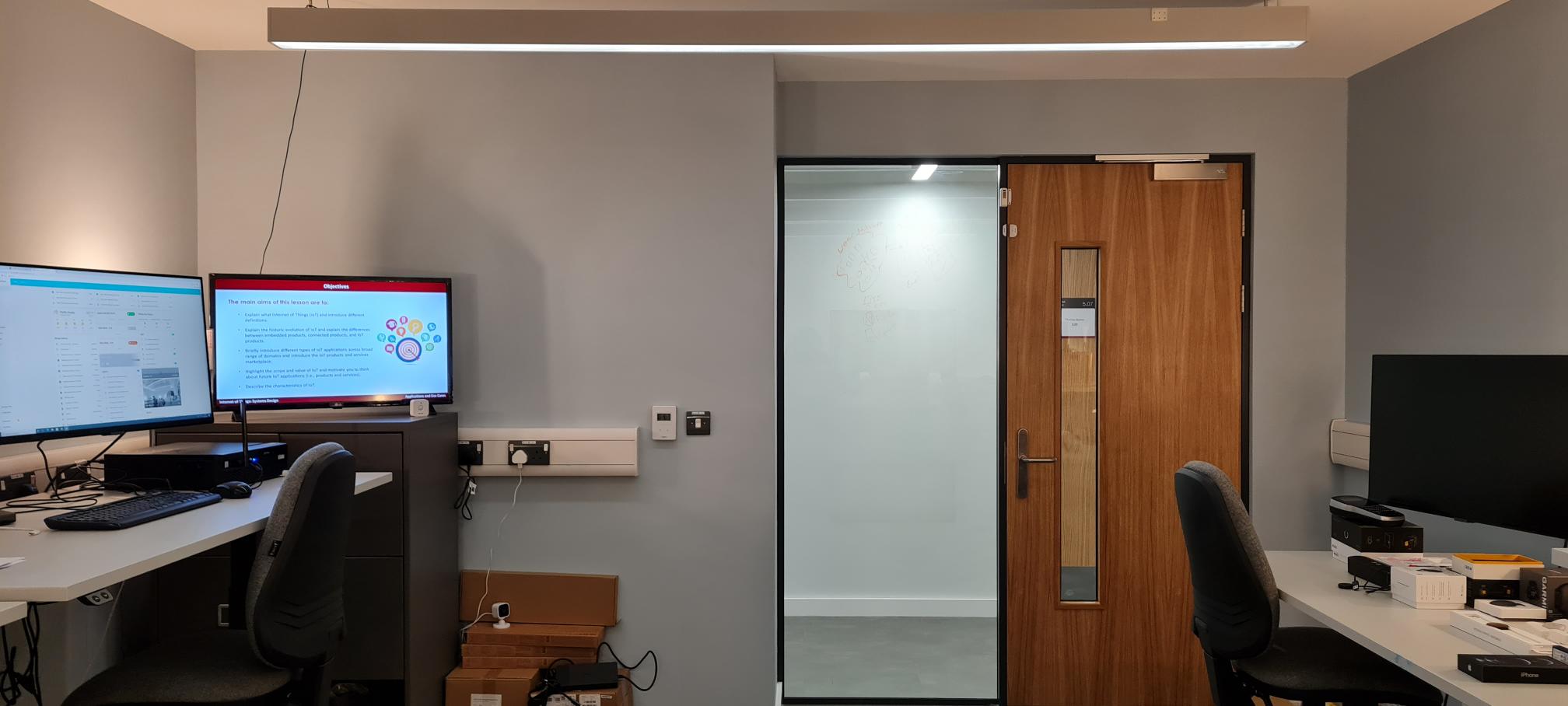
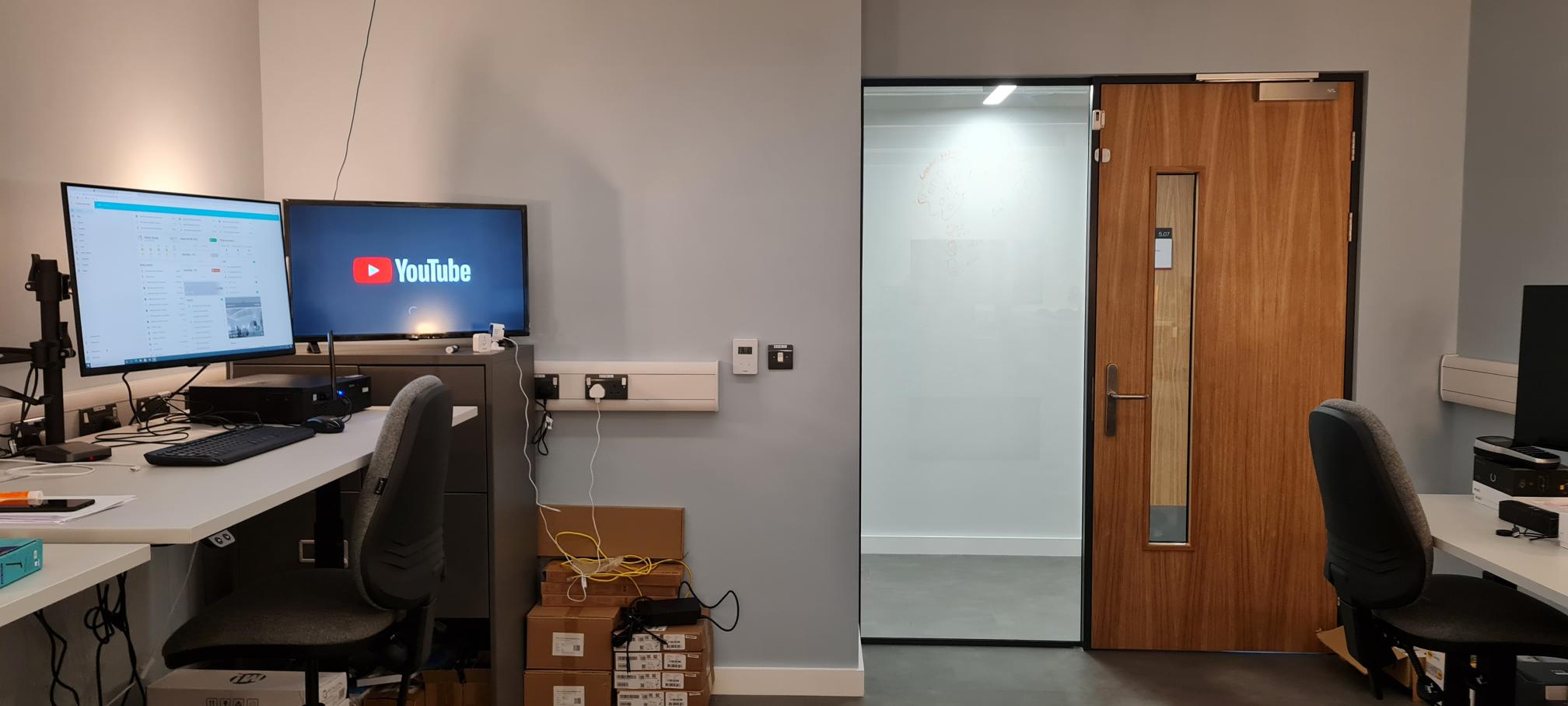
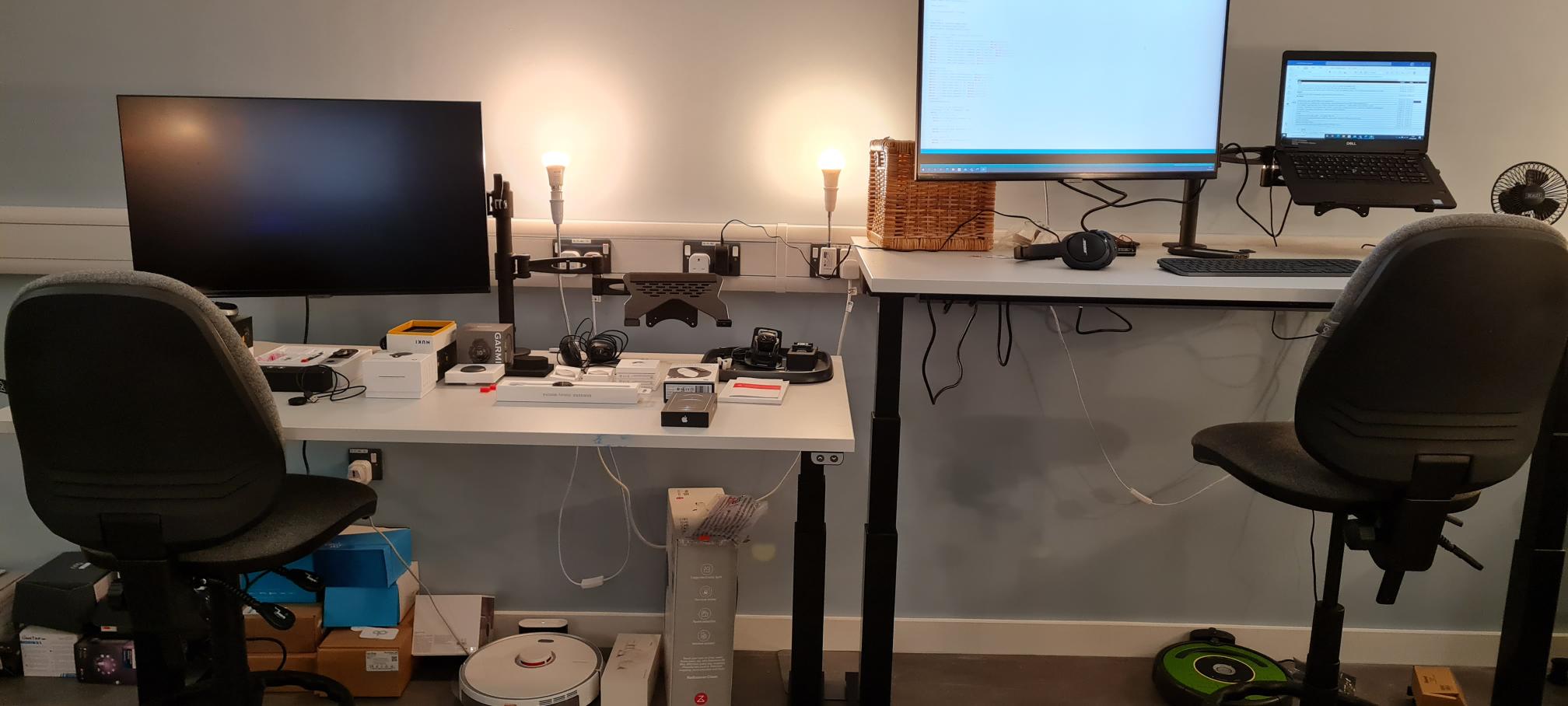
Team



Repositories
smarthome-traffic-classifier
Jupyter notebooks and datasets for smart home network traffic classification. Includes binary IoT vs non-IoT detection, multi-class device fingerprinting, and device state recognition. Provides CSV traffic captures for training and evaluation.
bre-smartbuilding-analysis
Network traffic analysis toolkit for the BRE smart building dataset. Provides a shell script that runs Tshark to generate protocol stats, endpoint and conversation summaries, HTTP & DHCP reports, plus a Plotly/Scapy notebook for interactive PCAP visualisations.
smart-home-lab
Provides scripts to stream network and home automation data via Kafka, query Cassandra archives, Jupyter notebooks for PCAP and Home Assistant/OpenHAB analysis, and setup guides for building an IoT testbed with MQTT and data capture.
smarthome-activity-monitoring
Flask-based platform for smart home network activity monitoring. Captures packets via tshark and scapy, transforms flows with CICFlowMeter, and applies ML models to classify device states. Uses APScheduler for periodic capture, SQLAlchemy storage, and templated web dashboard.
smart-home-activity-simulator
Web-based smart home activity simulator using Python, MQTT, and OpenHAB. Configure floors, rooms, and devices; set event times and payloads; then publish them via MQTT. Includes logging, log viewer, Selenium connector, and Bootstrapped frontend assets.