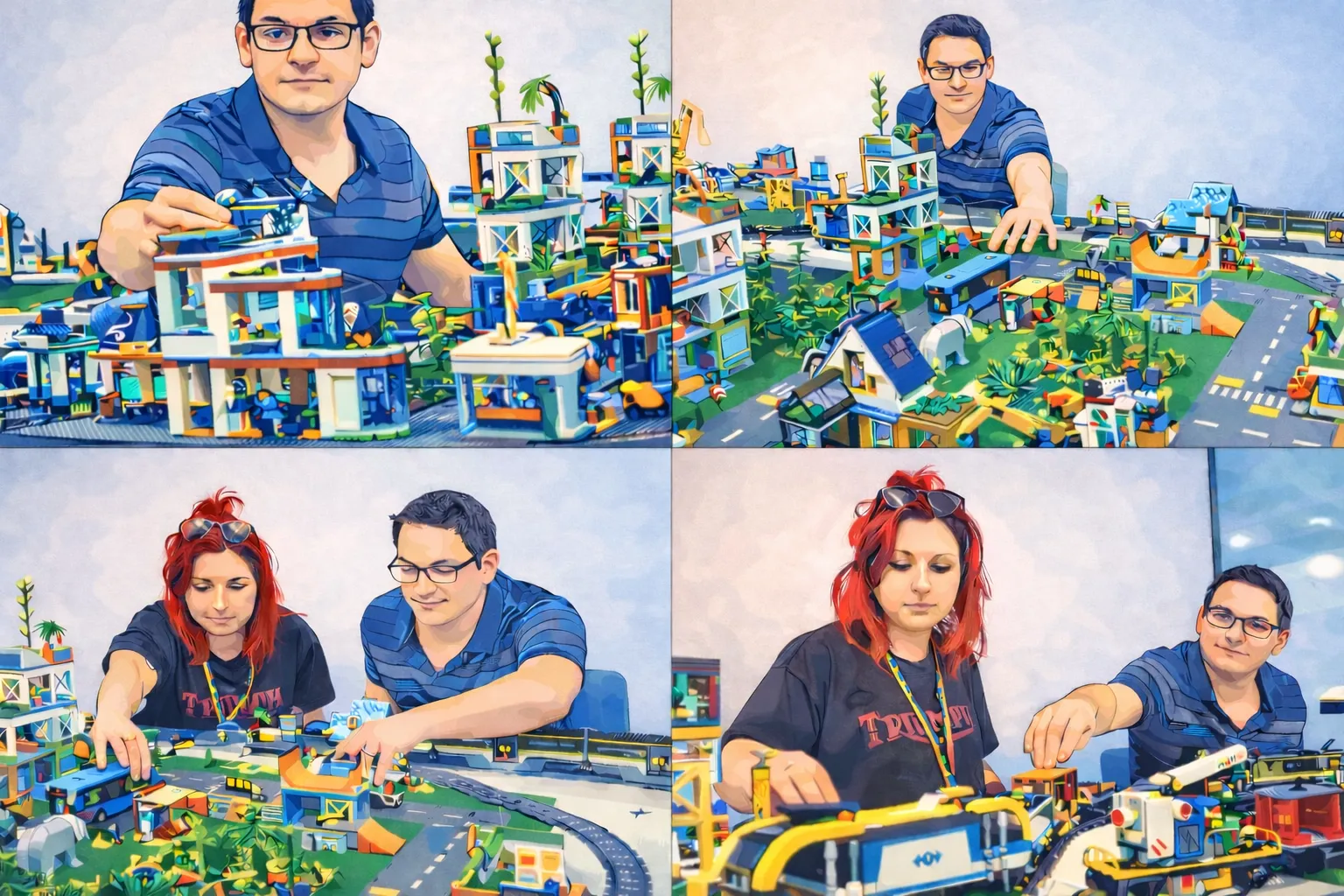
Smart City Lego Lab
Project Overview
The Smart City Lego Lab is an augmented reality-enabled physical demonstrator built from Lego, designed to communicate the collective impact of Internet of Things research to public audiences. The model represents a smart city environment where cyber-physical risks, sensor deployments, and data flows can be visualised through augmented reality overlays. The demonstrator serves as a tangible engagement tool for explaining complex IoT concepts to non-specialist audiences, including schoolchildren, policymakers, and the general public. By combining a familiar medium with digital augmentation, the lab bridges the gap between abstract technical research and intuitive public understanding. The physical Lego city includes representations of urban infrastructure such as buildings, transport networks, and public spaces, each annotated with AR layers that reveal underlying sensor networks, data pathways, and potential security vulnerabilities.
The augmented reality overlays allow visitors to see how smart city technologies operate beneath the surface. By interacting with the model, audiences can explore how sensors collect data, how information flows through urban networks, and where potential cyber-physical risks may emerge in everyday urban environments.
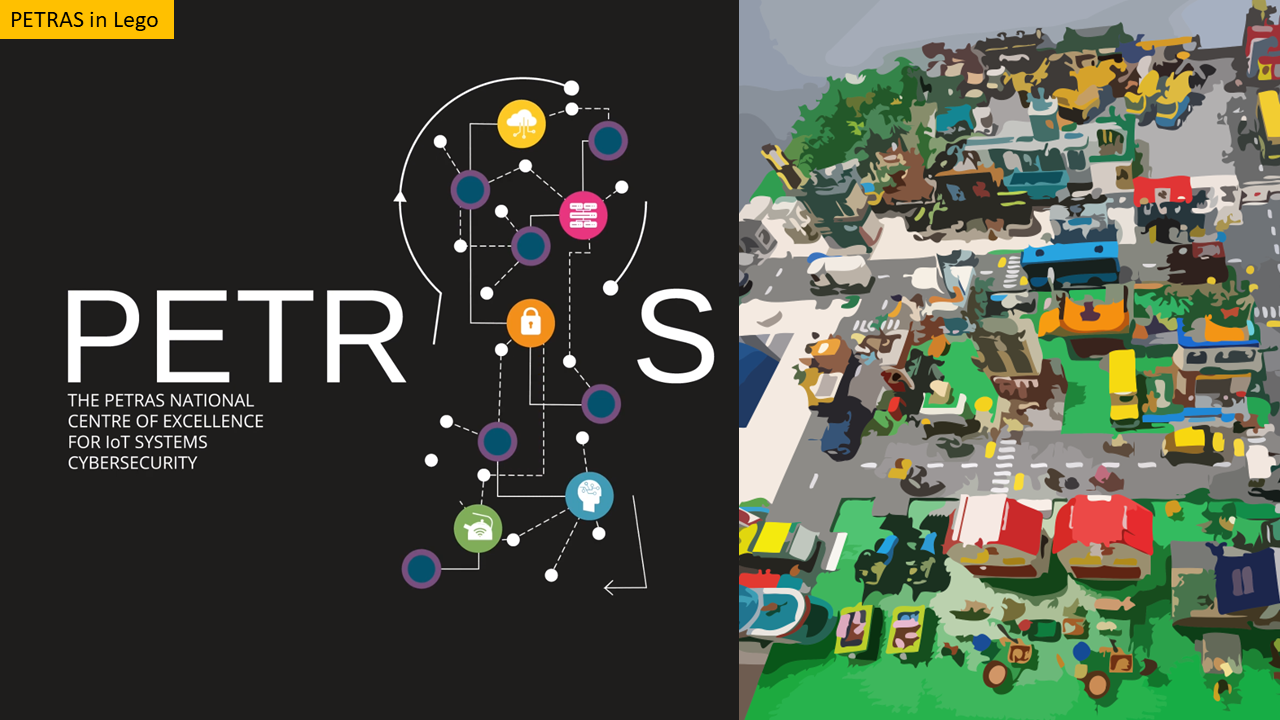
The project supports IoT education, outreach, and cyber-physical risk exploration. Researchers use the demonstrator to show how smart city technologies operate and interact in practice, while the controlled and accessible setting also provides a platform for exploring cyber-physical risk scenarios. The Smart City Lego Lab is funded through the PETRAS National Centre of Excellence for IoT Systems Cybersecurity and is used at public engagement events across the United Kingdom.
Team




Funding


Repositories
lego-smart-city
Working files for the Smart City Lego Lab — the Lego-based augmented reality smart city demonstrator used for public engagement, IoT education, and visualising cyber-physical risks across urban infrastructure.
smart-city-base
Smart City Simulator — Interactive isometric city builder powered by Google Gemini AI. Manage a virtual metropolis with AI-generated tasks. Built with React, TypeScript, and Vite.