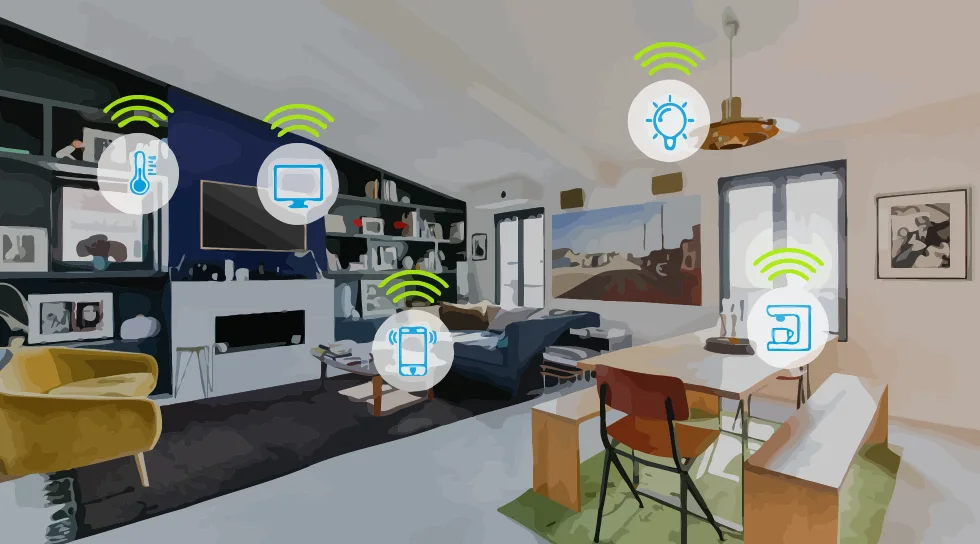
Privacy-Aware Smart Home Data Management
Project Overview
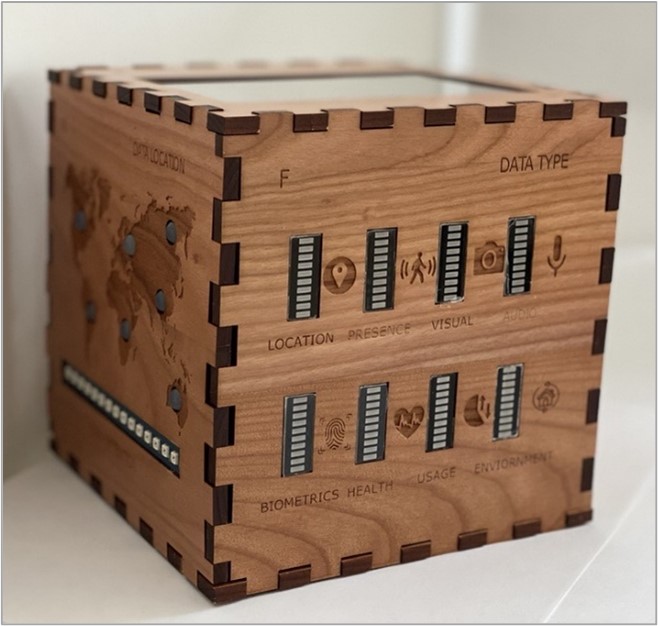
The balance between protecting user privacy and providing usable IoT experiences is a key challenge for smart-home product designers. Traditional notification models assume the presence of screens, yet in IoT environments screens are rare or very small, making conventional privacy controls inadequate. This project explores how non-technical household occupants can understand what data is collected about the spaces they inhabit and how to express their privacy preferences effectively. The research focuses on tangible interfaces, specifically PrivacyCube and the PriviFy toolkit, that act as enhanced privacy notices for smart-home environments. These physical devices visualise how smart-home sensors and connected devices manage personal data, enabling people to make informed decisions about their privacy without requiring technical expertise. Built using Arduino microcontrollers and 3D-printed components, the tangible interfaces provide intuitive, hands-on mechanisms for privacy configuration that complement or replace screen-based alternatives.
The project reviews existing notification methods, designs and prototypes tangible privacy devices, and evaluates how these artefacts affect privacy awareness and control in shared domestic environments. The physical interaction model is accessible to all household members regardless of technical background, offering a more intuitive approach to privacy management than conventional screen-based interfaces.
User studies assess the impact of tangible interaction on privacy comprehension and preference expression among diverse household members. The work contributes to the fields of usable privacy, human-computer interaction, and IoT systems design, advancing understanding of how physical interfaces can mediate privacy management in connected homes.
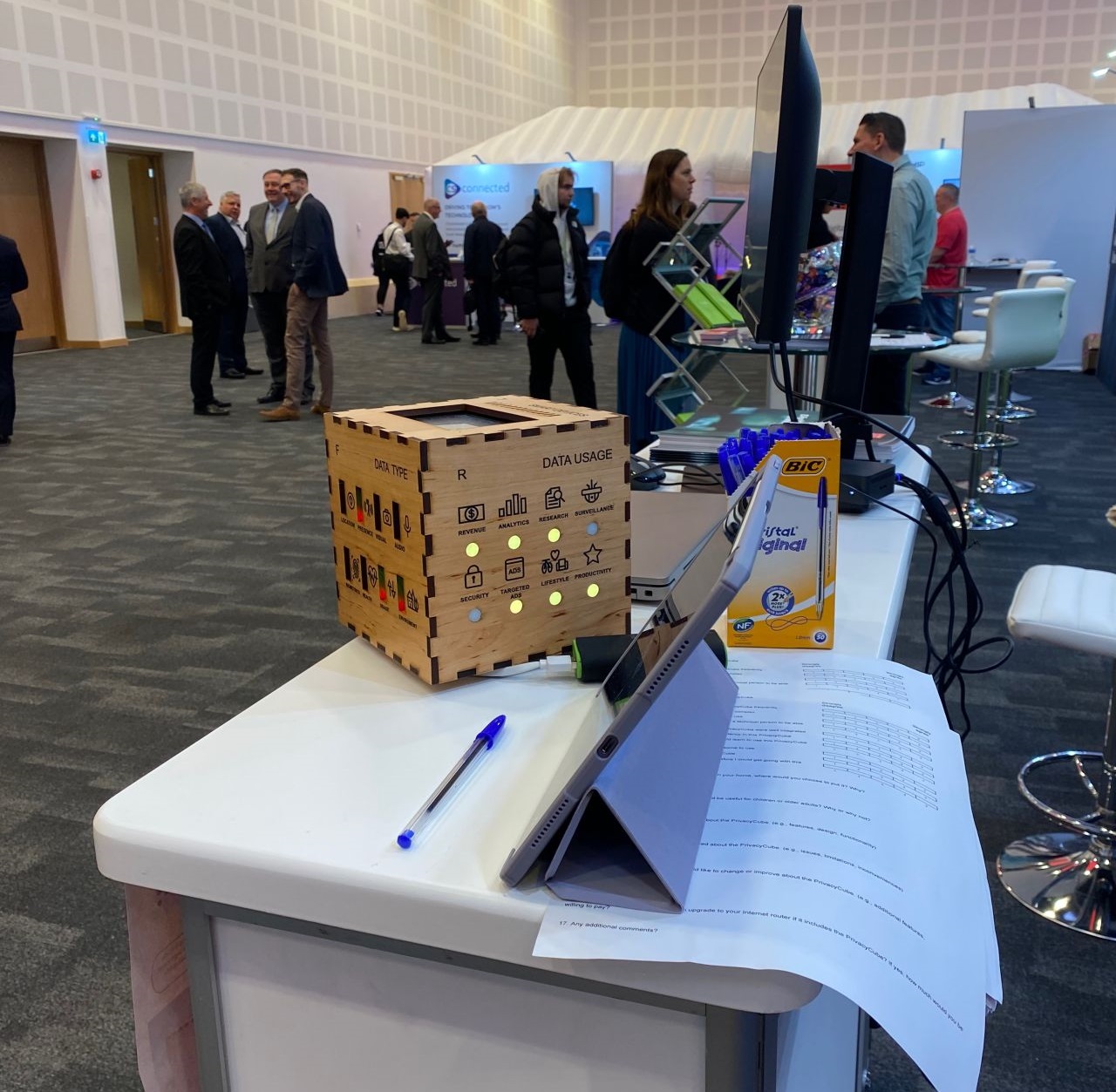
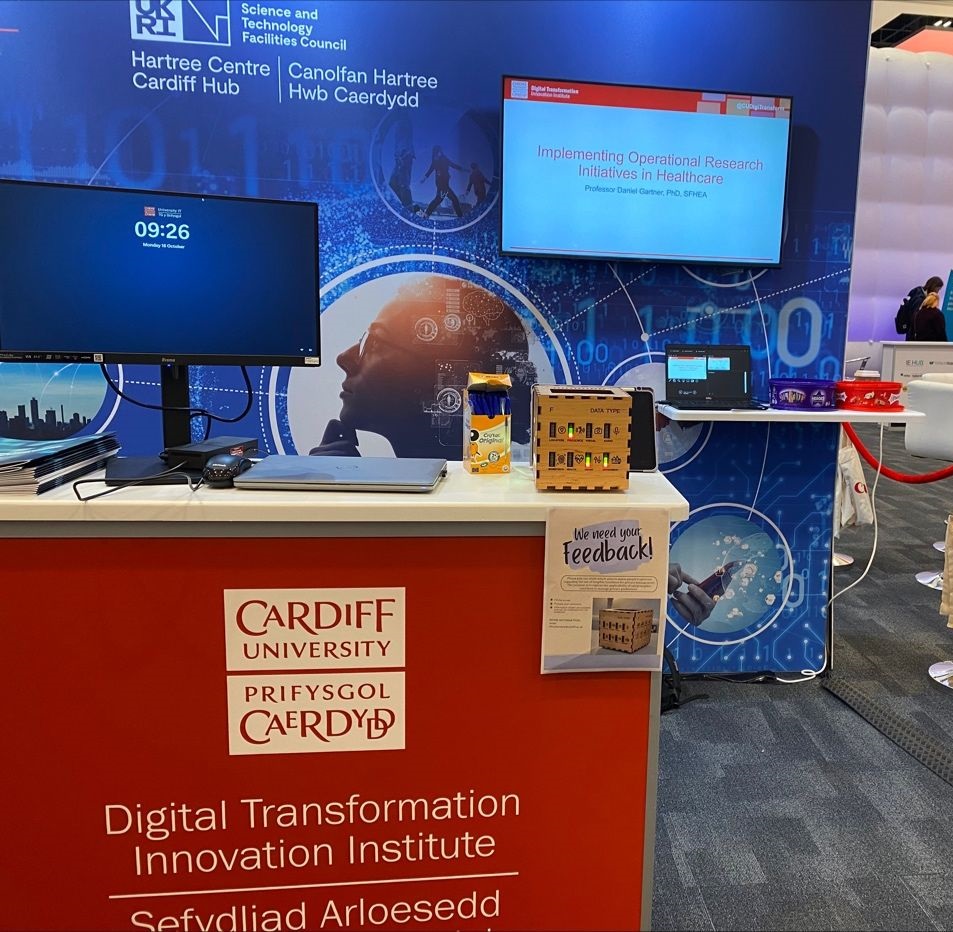
Wales Tech Week 2023 Photos

Team



Partners

Repositories
privacy-patterns-booklet
LaTeX source for the "Privacy Patterns for Internet of Things" handbook. Includes chapters, numerous pattern definitions, images, bibliography, and a compiled PDF. Use these materials to explore privacy-preserving design strategies and tailor your own documentation.
privacycube-device
PrivacyCube reveals smart home data flows with a tangible interface. Python services sniff network packets, track device activity, map IP addresses, and sync JSON state. A watchdog streams updates to an Arduino-powered LED cube and Nextion display, raising household privacy awareness.
privacycube-privify-suite
Suite for managing IoT privacy in Home Assistant. The add-on detects devices, retrieves their policies, extracts key data, and sends alerts to the PrivacyCube display. PriviFy hardware lets users adjust retention, usage, and sharing settings via encoders and buttons. Includes Docker build, scripts, and Arduino code.
privify-device
Hardware and software framework for PriviFy, a tangible device that configures smart-device privacy preferences. Combines Arduino sketches for Nextion HMI and LEDs with a Home Assistant add-on that builds helpers, automations, and dashboards.