Predict Animal Movements using Collar Data
Project Overview
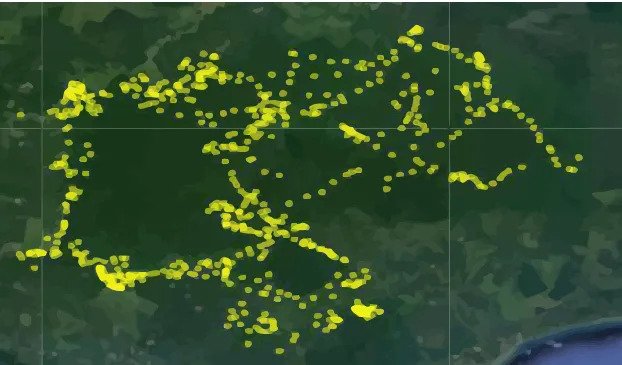
Wildlife conservation efforts increasingly rely on IoT-enabled collar telemetry to monitor endangered species, yet the resulting GPS datasets remain underutilised for predictive purposes. This project explores collar telemetry data collected from Bornean pygmy elephants in Sabah, Malaysia, with the intention of helping patrollers better understand elephant movement patterns and thus locate individuals more efficiently. Building on the observation that elephants exhibit consistent movement trends when traversing natural forest corridors, the research aims to develop and train a machine learning regression framework capable of predicting future GPS locations and movement trajectories. The predictive models leverage historical collar data to identify temporal and spatial regularities in elephant behaviour, including preferred corridors, resting sites, and seasonal migration patterns. By forecasting likely positions over short time horizons, the system is intended to serve as a secondary tool for conservation rangers to base patrol routes around, improving the efficiency of field operations.
The predictive framework reduces the time required to locate target animals within dense tropical forest environments. Rangers equipped with movement forecasts can prioritise areas where elephants are most likely to be found, enabling more strategic allocation of limited patrol resources across large and often inaccessible conservation areas.
The project is situated within a broader Forest Observatory initiative that integrates sensor systems and data science techniques for biodiversity monitoring. Outcomes from this work contribute to understanding how IoT-derived wildlife data can inform sustainable conservation strategies in tropical forest ecosystems.